


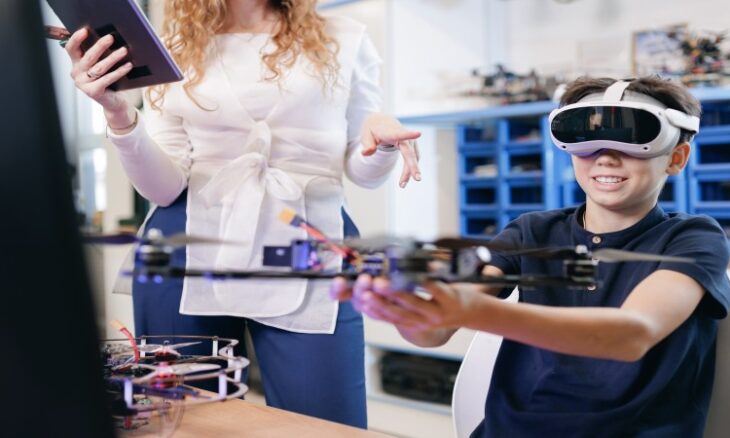
Students Present Drones and VR at STEM Camp Finale
Parents visited Gillette College to see junior high students present technology and engineering projects during the closing event of the STEM Achievers summer camp after participants completed a three-week programme focused on science, technology, engineering and mathematics.
The showcase featured work produced by dozens of students preparing to enter sixth, seventh and eighth grades. Throughout the programme, participants completed a series of practical activities centred on engineering, coding, virtual reality, and drone technology, working both individually and in teams to solve a range of technical challenges.
Although many students regarded working with robots as one of the programme’s highlights, the camp also introduced them to virtual-reality design, drone operation, and engineering exercises set in simulated actual-world environments. Activities included flying drones and driving miniature trucks in virtual reality, designing settlements on Mars, and developing solutions to a series of overlanding challenges over different landscapes.
One of the principal virtual reality projects required students to design colonies on Mars using computer software before exploring their creations with VR headsets and hand controllers. The digital environments allowed participants to move through the settlements they had created and examine different elements of their designs from within the virtual world.
Student Owen Mullaney created a detailed Mars colony that included facilities for food production, water storage, and entertainment, such as a coliseum. The project also incorporated portals linked to locations around the Gillette College campus using images captured with a 360-degree camera. Area 59 Director Ellen Peterson demonstrated how users could move around the Mars settlement before teleporting directly to locations such as the Pronghorn Centre within the same virtual environment. She also noted similarities between the project and the film The Martian.
Owen Mullaney and fellow student Finn Gee also developed a separate virtual reality environment inspired by the horror film concept known as Backrooms. The project recreated the familiar maze of repetitive yellow corridors while introducing a bright orange crab as one of the digital characters within the environment.
Engineering was another major part of the programme, through a simulated overlanding expedition led by Sandra Pennington, a first-grade teacher at Pronghorn Elementary School. Students were presented with a sequence of obstacles that required them to combine coding, engineering, and design skills to continue their journey.
One challenge required participants to develop coding capable of detecting rising temperatures so they could monitor whether their vehicles were overheating. Students also designed and built protective holders for newly engineered sensors to keep the equipment secure while travelling through dense jungle terrain.
The expedition then required teams to design bridges capable of carrying their vehicles safely across a river before tackling a desert that blocked the route to a simulated Mexican pyramid. Every participant received a different engineering problem, with students encouraged to work together by combining the coding, design and engineering techniques introduced throughout the programme.
During the closing event, Peterson introduced parents to the subjects covered during the camp before students demonstrated their completed work. The showcase also gave families an opportunity to see first-hand the projects and technical activities that participants had been discussing throughout the three-week programme.
Drone operation and aerial videography were other major components of the STEM Achievers programme. Students learnt how to fly drones safely while becoming familiar with the technical language used to control the aircraft, including manoeuvres such as roll and yaw. After completing the required training, each participant earned a pilot’s licence and then produced and edited a video using footage captured with a DJI Neo drone.
Students who completed different stages of the drone activities received metal tags recognising achievements in drone safety, pilot certification and video editing. Finn Gee displayed the collection of tags awarded during the programme, which were attached to a braided metal key chain assembled throughout the camp.
The drone projects reflected a wide range of creative approaches. Some students produced aerial selfies, while others recorded football matches in which drones were used to push a ball into a goal inside the college’s Tech Centre. Another project captured two students handling a hacky sack from a bird’s-eye perspective using drone footage.
One participant created a heavily edited video that opened with fictional references to Netflix and the Palme d’Or before moving to aerial views of the Gillette College campus and footage of a drone football match involving the student and a partner. The presentation demonstrated the video-editing techniques introduced during the programme, alongside practical drone-flying skills.
The closing showcase featured the variety of projects completed during the three-week camp, with students presenting work spanning virtual reality, drone technology, coding and engineering. Parents were able to view demonstrations across each activity area while learning more about the practical exercises undertaken during the programme.
The event likewise reflected the broad range of technical challenges completed by participants. Students had designed virtual Mars colonies, created immersive computerised environments, coded temperature-monitoring systems, engineered protective sensor holders, constructed bridge designs for simulated river crossings and applied creative problem-solving skills to a sequence of environmental obstacles. Drone operation and aerial video production added another practical element to the programme, permitting participants to combine technical instruction with creative digital content.
The showcase concluded with students displaying the work and achievements they had accumulated throughout the camp. Alongside virtual reality projects, engineering exercises and drone demonstrations, participants presented the qualifications and recognition they had earned during the programme. Finn Gee displayed his completed collection of coloured achievement tags on the braided key chain after finishing the drone section of the camp, while indicating that he was unable to identify a single favourite activity because of the range of experiences offered during the three-week programme.